.png)
.png)
.png)




.png)
Orientation confidence for a stronger structural model.
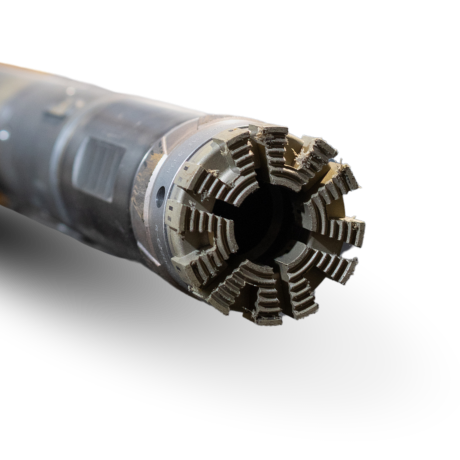
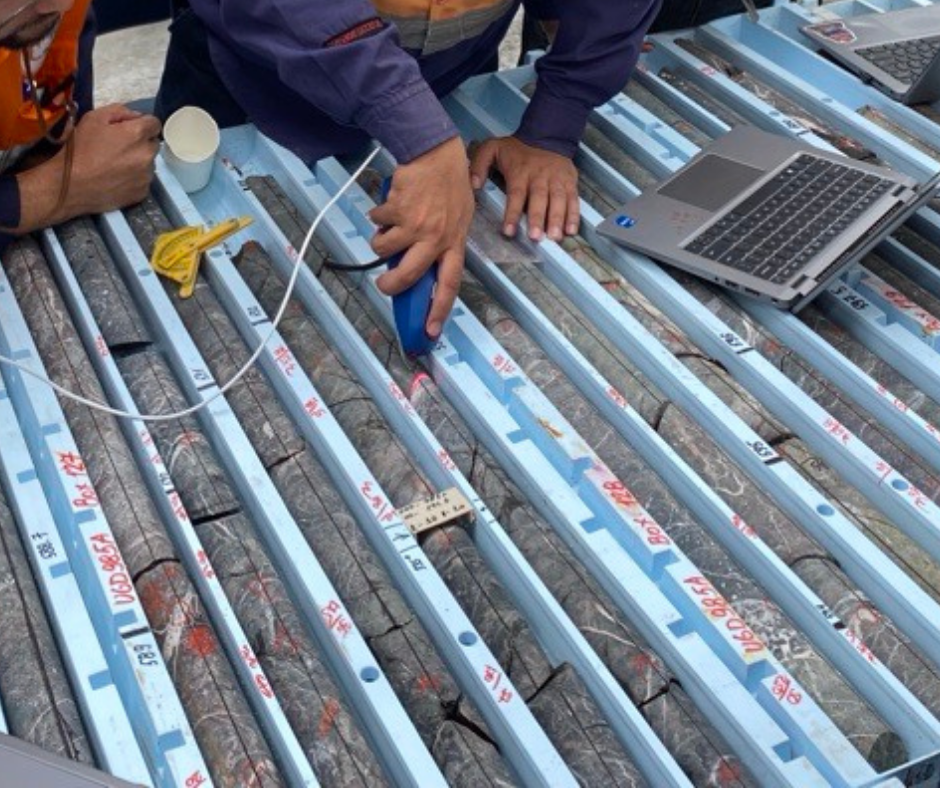
A single red mark may seem insignificant relative to the value core orientation brings to an ore body model. And despite the technological advances drilling has seen in recent decades, it still remains a challenging task relying on skill, experience, and consistency at the rig. Small variations in orientation outcomes can introduce downstream risk that can compound over time, and when data quality and visibility slips, confidence in the model slips with it.
Geologists need two things. Auditable orientation data that holds up at any point in the mining life cycle. Confidence that the data reflects what actually happened at the rig.
IMDEX’s ACTx delivers both. It improves accuracy, protects data integrity and moves the process firmly into the digital age.
Geologists seeking to create reliable 3D models of the subsurface don’t just rely on high-quality core samples. They also depend on equally high-quality data about those samples’ orientation in the ground. The former, without the latter, can mislead analysis, skew models and deliver false confidence.
This is especially true in complex and variable rock structures, or where the recovered rock is broken, and reliable marking becomes even more difficult. These are challenges that under pressure drilling operations are having to cope with ever more frequently.
Where traditional core orientation processes face problems
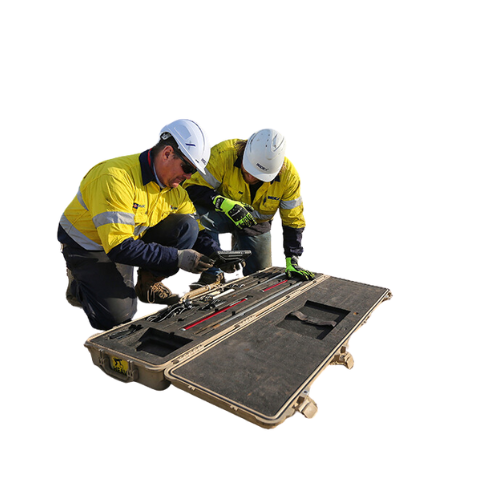
The manual process of marking a red line on the core to indicate its orientation isn't always easy, and often made tougher by a lack of immediate feedback on how that information will be used later. The mark is applied once, at the rig, but this is an environment that presents numerous challenges. Working conditions, fatigue, cramped working spaces and most importantly time pressures raise the risk of small errors that create larger data problems.
Without immediate validation or shared visibility, minor inconsistencies at this point can carry through into interpretation, modelling, and downstream decisions.
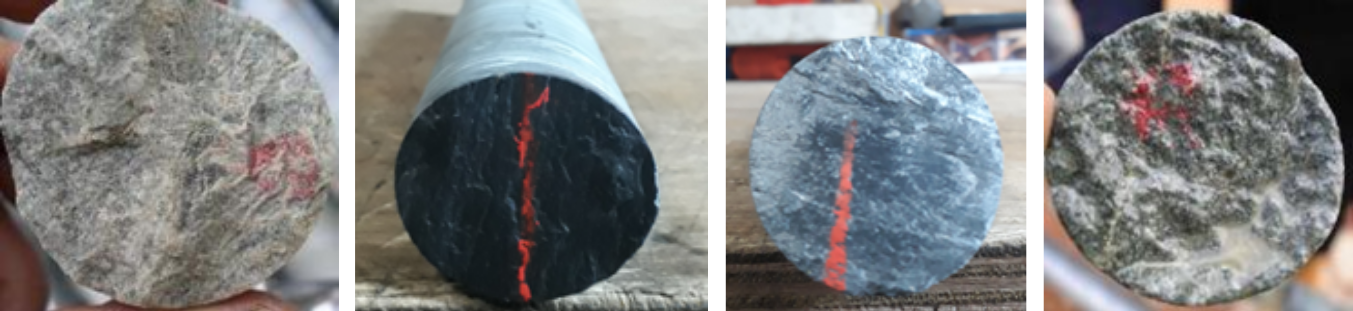 Core orientation errors that are all too familiar
Traditional core orientation systems lack the digital element that connect driller to geologist. There is no ‘common-ground’ information gathering system that gives geologists insight into how the orientation was done, or why in some instances it was skipped.
Mistaken markings may not be noticed for some time. Days may later be lost correcting data inconsistencies, with potential delays to the project’s progress.
Everyone feels the tougher demands that today’s mining is placing on operators. Targets are tighter. Ore bodies are more complex. As mining operations increasingly find themselves in varied terrain and conditions, raising sample orientation measurement into the modern, digital domain becomes even more pressing.
Fixing this stress point in data gathering can deliver a crucial advantage in today’s high-pressure mining environment.
Boosting confidence in core sample data
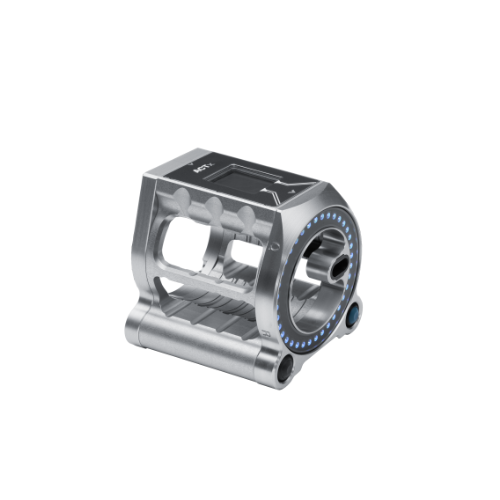
ACTx and its partnering solutions are the latest iteration of IMDEX’s digital answer to plugging this data gap, and addressing challenges in the core orientation and marking process. ACTx provides drillers with a specialised marking jig that intuitively guides them to apply the orientation line precisely, guaranteeing a sharp and high-quality mark not just on the core face, but along the core edge every time.
In short, it gives your teams the power to get back to the accuracy and consistency that makes drilling operations successful.
ACTx exists to:
- Deliver precision and consistency in every mark
- Record results digitally for quality control, better communication, and more confident, auditable analysis
- Shorten the time to orient core at the drill rig site
- Improve operational efficiency by being safer, lighter and easier to use
ACTx in action
“Pretty much all orebodies have some element of structural control and as we go deeper and chase smaller, lower grade ore bodies, structure becomes even more critical,” says Sara Sulway, IMDEX Product Strategy Manager.
“Unfortunately there are many ways that an orientation mark can go wrong, and make this pursuit of recalcitrant ore even more difficult...
“ACTx provides unparalleled quality control and traceability. The unique orientation jig works with the ACTx down hole unit to ensure there’s a good orientation mark on the core, and that Q/A data about the orientation and marking process is collected as it goes.”
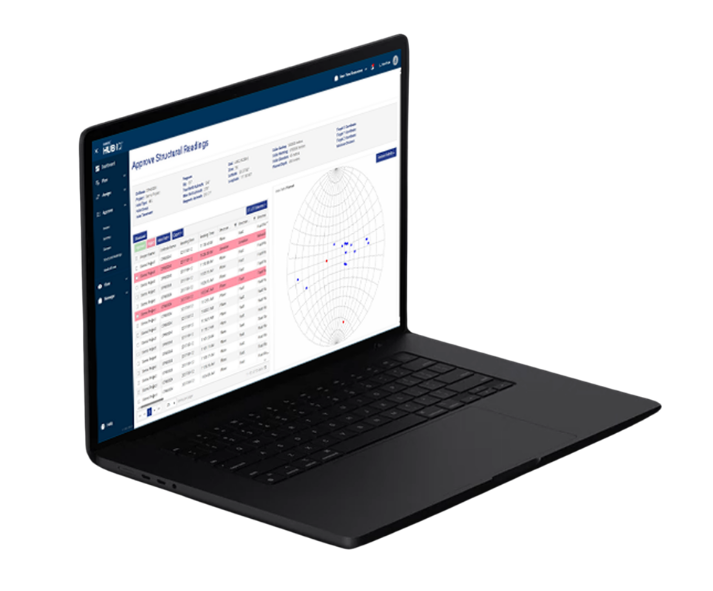
That data is transferred seamlessly to HUB-IQ for the geologist to process and review. With each orientation, the driller can use the SURVEYxMINE operating app to see issues and record their comments as to what went wrong and why. The additional insights provide the geologist with much needed confidence in the structural data. It also reduces errors, occurrences of missed orientation and supports stronger communication and customer relationships.
For drillers, ACTx improves efficiency and precision during core orientation. The system is lightweight and easy to manoeuvre, reducing manual handling risks. There is no core barrel extension and instead of rotating the inner tube full of core, the driller rotates the jig until precise alignment is achieved. The core is then marked within the guided slots of the jig, ensuring a consistent and correct core mark every time. There is no need to break joints to communicate with the downhole unit.
A red mark you can rely on
“When drilling, the goal isn’t just to create a hole in the ground,” says Dr James Cleverley, IMDEX Operations Manager – Minerals, Europe. “It’s to extract the best possible sample of the geology beneath our feet,”
“Every measurement taken from that sample: geochemistry, mineralogy, petrophysics, and especially structural data, depends on knowing precisely where the sample came from, and its orientation at the time of extraction. All of which hangs on the accuracy of that red line, marked on the sample, to know how to position that sample back to where it was in the ground.
“We’re giving the drillers a tool to help them to put that essential red line on the core in the most precise way possible, and also record for the geologist that it did, definitely, go in in the right place.”
The complete structural solution.
Partnered with IMDEX products such as HUB-IQ, LOGRx and ioGAS, ACTx delivers an immensely powerful sample-to-software tool: eliminating orientation errors in the core shack; making data more accurate, and easier to collect and share; validating Q/A at every step; and giving geologists the confidence in their subsurface analysis that drives exploration, ore recovery and eventual profits.
HUB-IQ
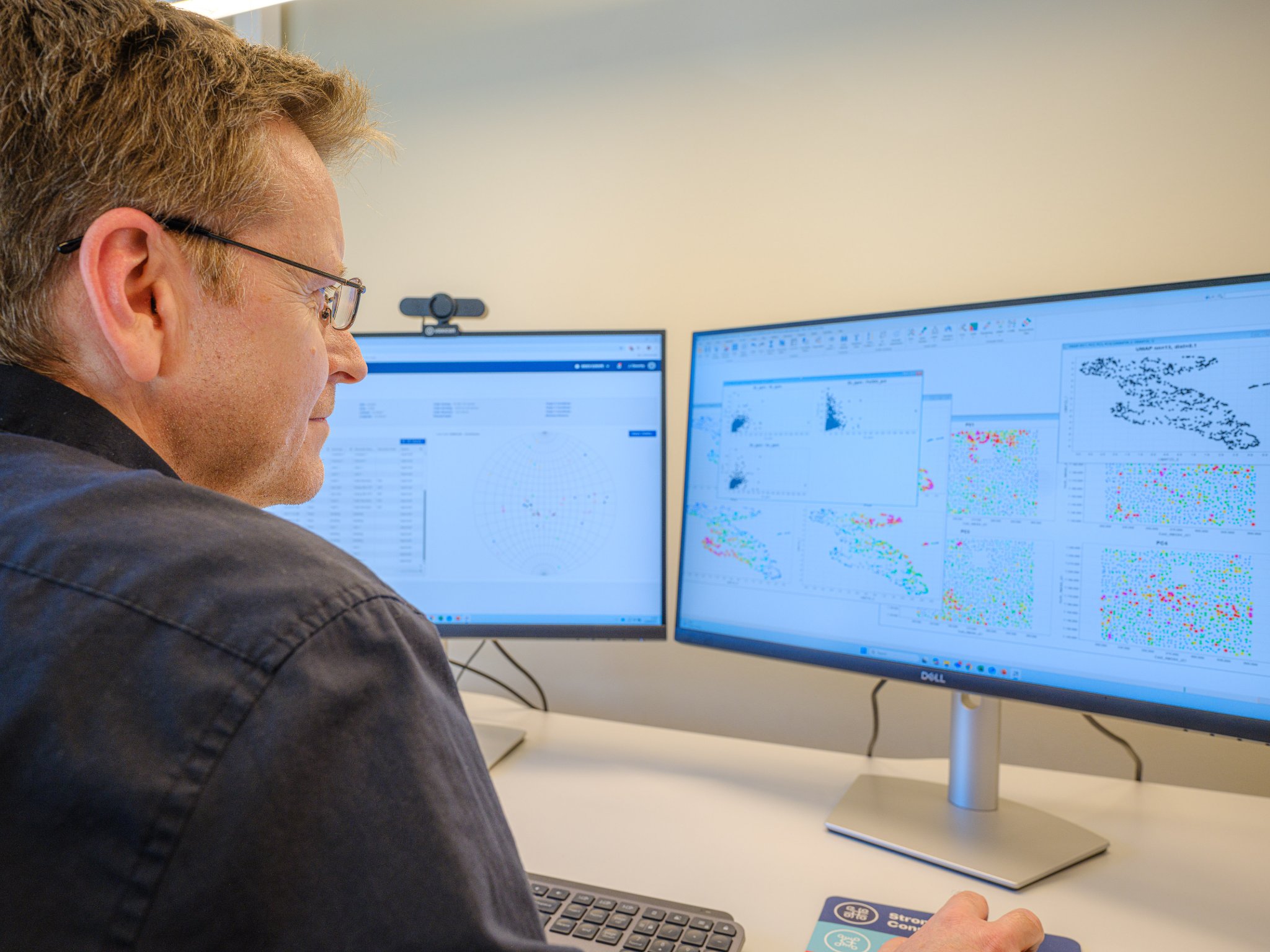
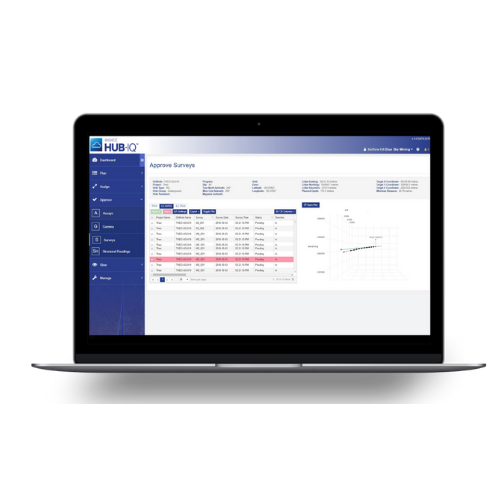
HUB-IQ™ is a secure, cloud-based portal that integrates with leading industry software to seamlessly validate data transmitted from the drill rig. A perfect partner for ACTx, it offers immediate access to and management of drillhole and core orientation data, supporting faster review and stronger data confidence. Beyond visualisation and QA reporting, HUB-IQ enables automated data correction and alignment across structural workflows, adjusting LOGRx measurements using up-to-date survey data. Downstream interpretation is based on consistent, validated inputs and manual rework across geology and structural teams is reduced.
LOGRx
LOGRx™ is IMDEX’s sleek and rugged handheld digital device, aimed at helping operators capture structural measurement data faster and more accurately in the field. It offers easy and intuitive laser alignment with structures, and features an ergonomic design that minimises user fatigue and aids a sturdy grip to improve the precision of hand-held measurements. The inbuilt data-verification capability (using stereonet projections) guarantees the accuracy and reliability of measurements. This real-time verification ensures that informed decisions can be made as data is collected, making geological assessments more efficient and dependable.
ioGAS
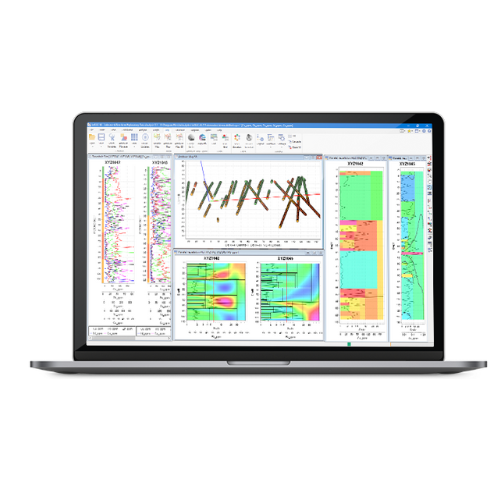
ioGAS™ software brings versatile data integration and multivariate techniques to structural geology interpretation. It's the industry standard software for exploratory data analysis in geoscience. Through multiple iterations, ioGAS has helped geoscientists spot patterns in complex datasets, identify vectors to mineralisation, and visualise diverse data with speed, scalability and precision. Its live link with Leapfrog Geo extends this capability into a connected 3D workflow, allowing data to move seamlessly between geochemical analysis and geological modelling. The integration supports faster iteration, stronger geological confidence, and better-informed interpretation without duplicate data handling or disconnected tools.